The Vision
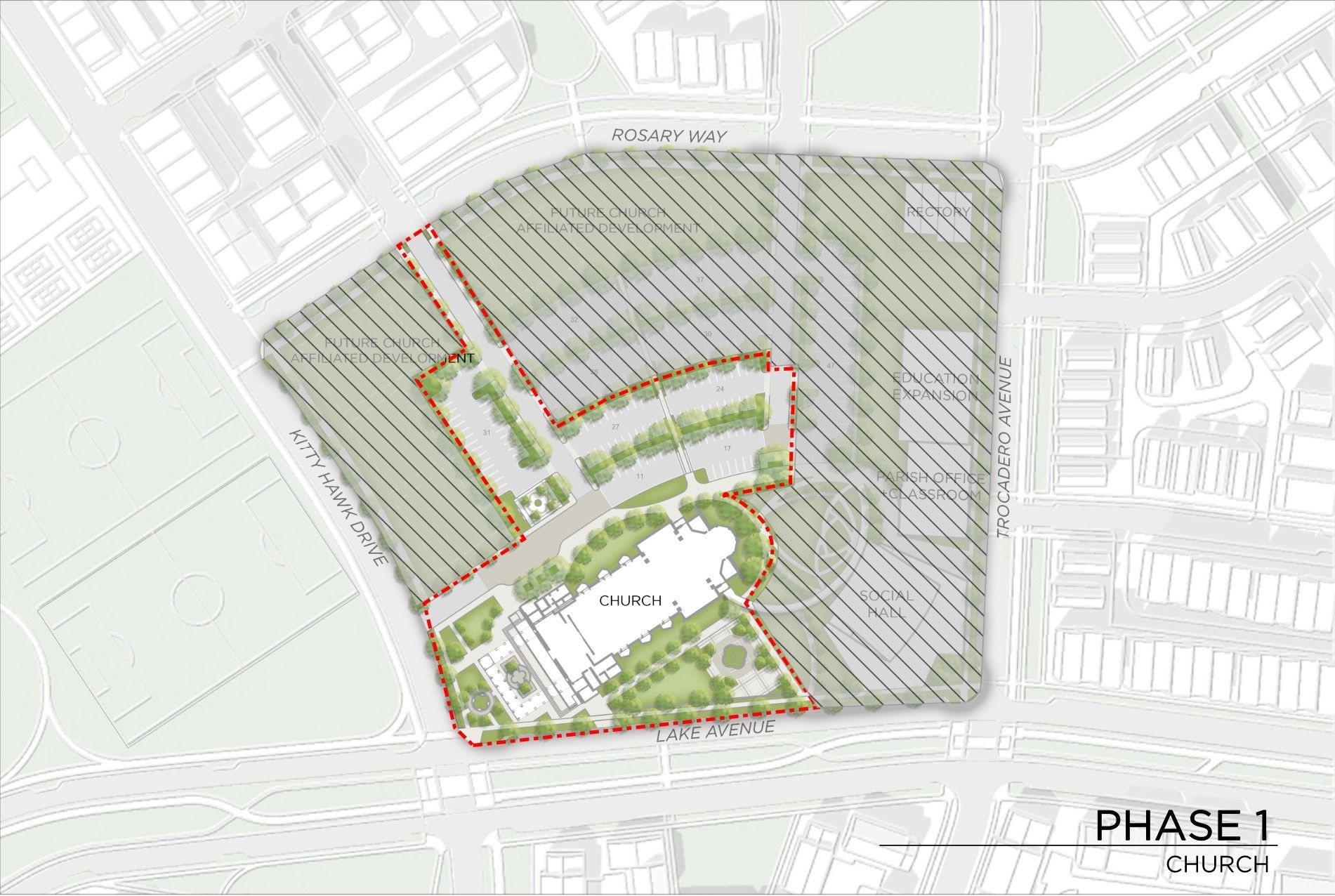
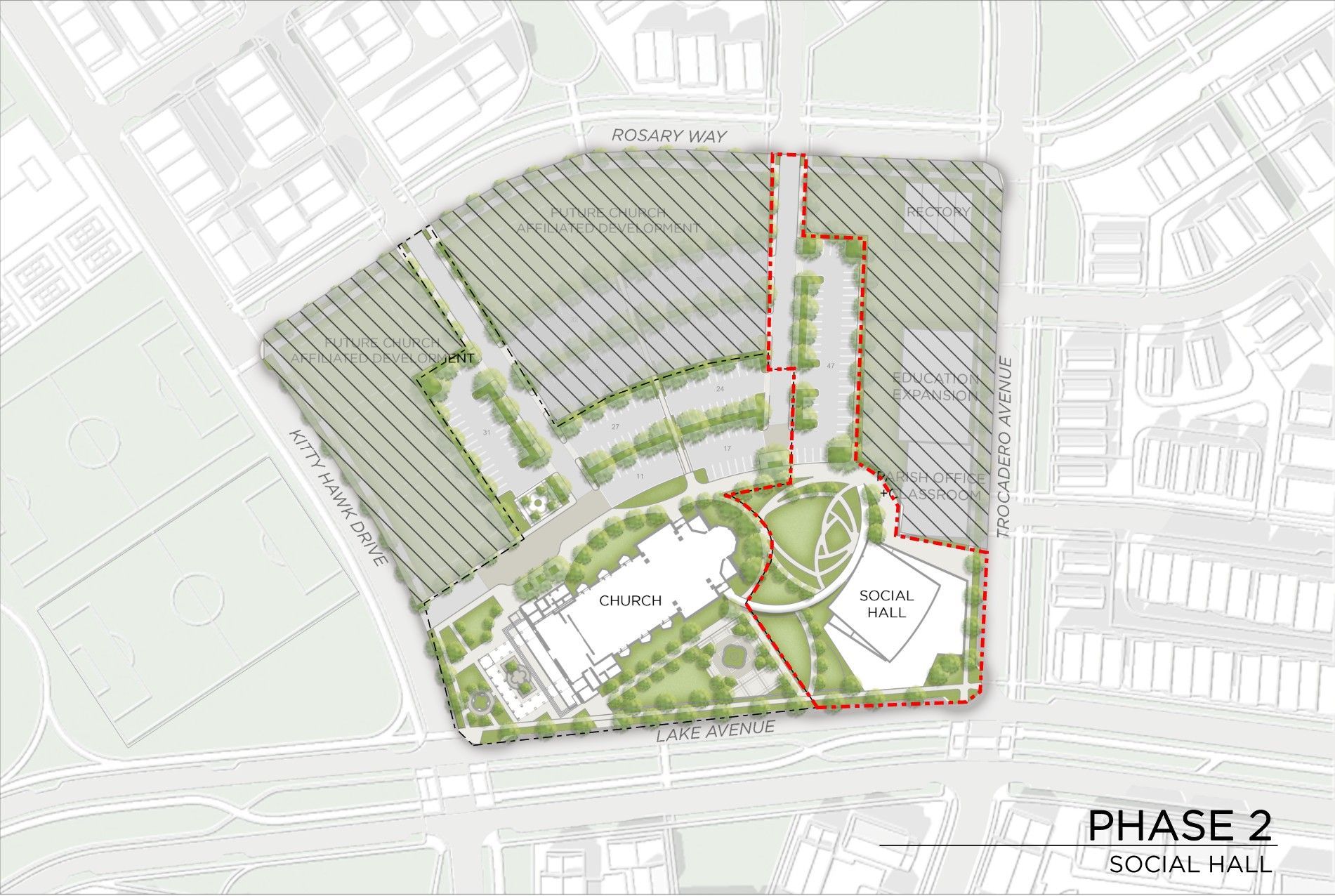
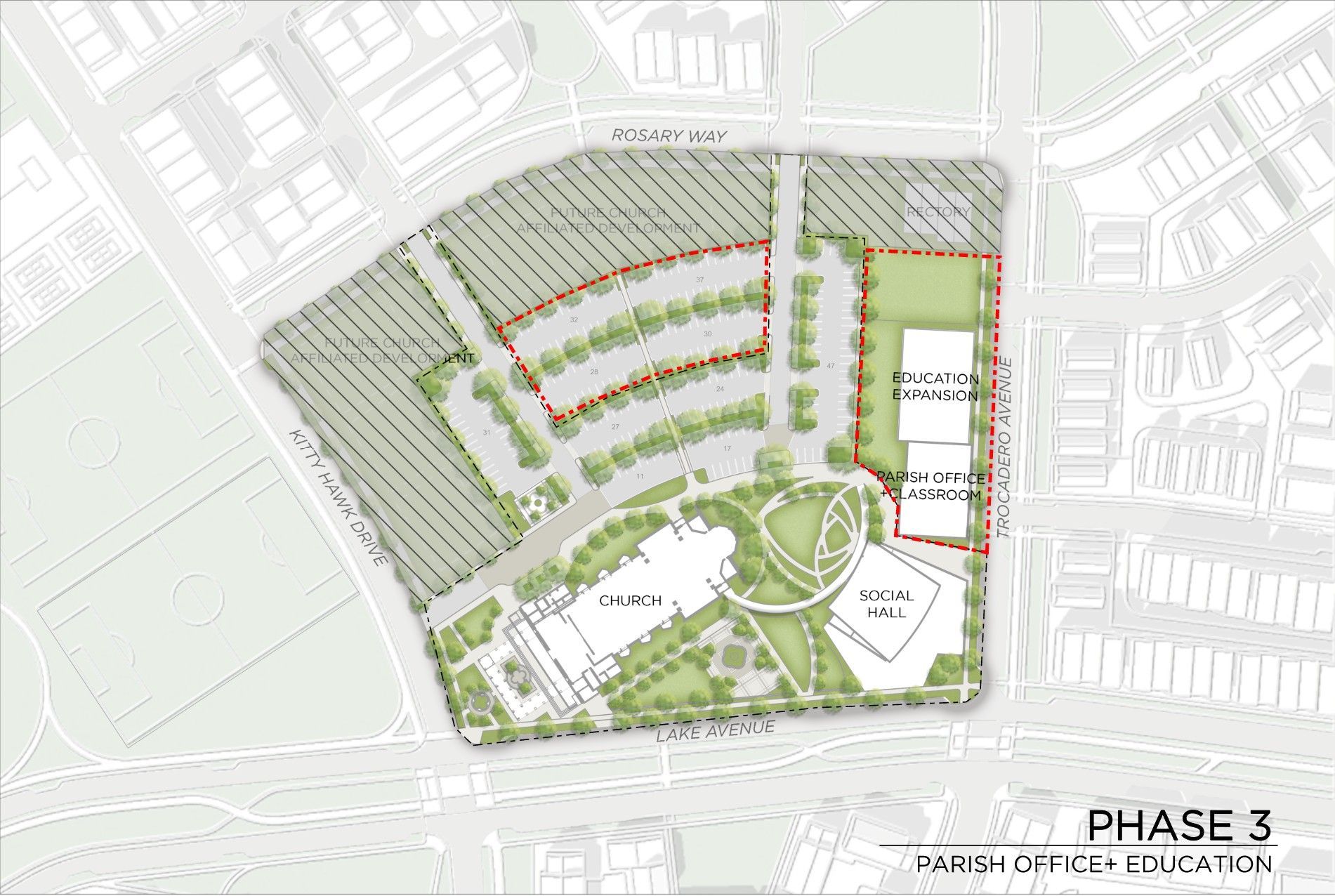
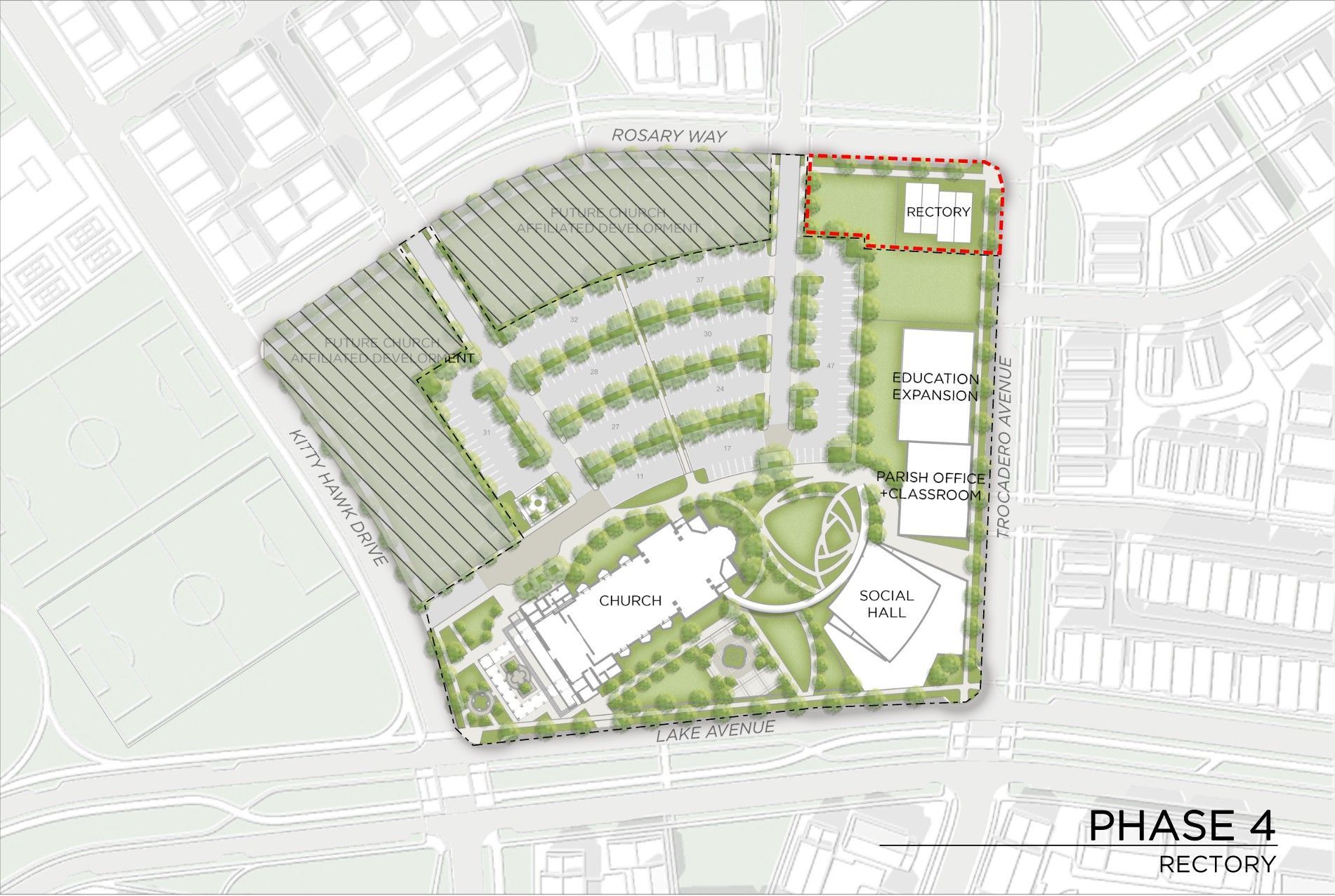
Below you will find an explanation of the various parts of the design of the church, as well as images showing the design phases of the site.
Theology of the Design
Everything about the art and architecture of the church structure is meant to draw the person in to an encounter Christ. Please scroll down and take a tour of the various elements of the design of the new church!
The new church draws deeply from our Catholic patrimony, employing an early Christian basilica and cruciform design. The design is also guided by the principle for liturgical reform put forward by the Constitution on the Sacred Liturgy Sacrosanctum Concilium of the Second Vatican Council. It says that the rites of the Church should be characterized by a "Noble Simplicity" (paragraph 34). Such a principle can be applied to the structure in which the rites are performed. But what does "Noble Simplicity" mean?
That which is "noble" is worthy of imitation and of praise. For example, someone who exemplifies virtue is called "noble" and arouses within us a desire to imitate that virtue. Christ is noble in the truest and fullest sense of the term. He is worthy of adoration, imitation, and praise. The art and architecture of the church must have Christ as its purpose and goal. It must draw the heart and mind up to the Lord who is the "one thing necessary" (see Luke 10: 38-42). Simplicity does not mean cheap or unadorned. It means a "singleness of purpose." The art and architecture are to point to Christ the noble one without distraction.
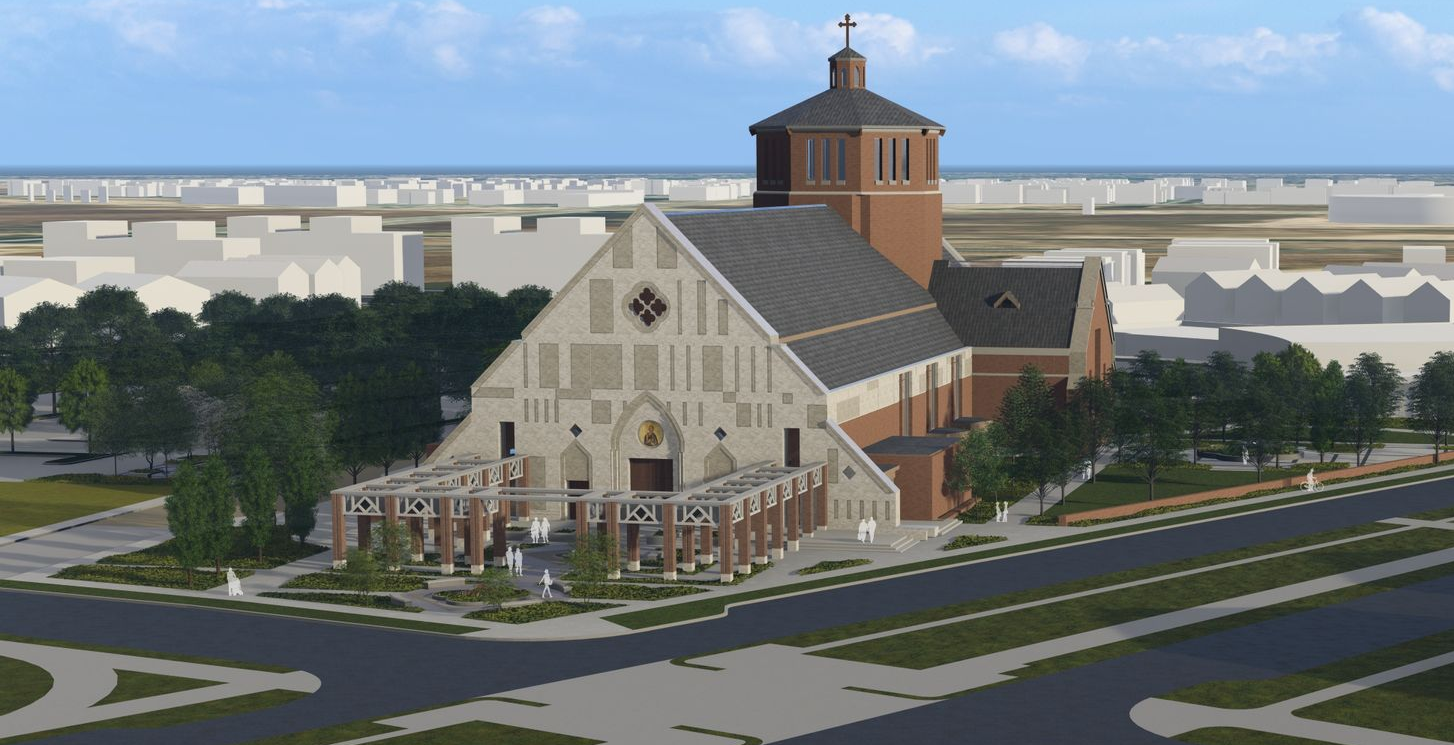
The main facade of the church is on the street corner. That is to say that the "face" of the church turned towards the world as an invitation to "Come and see."
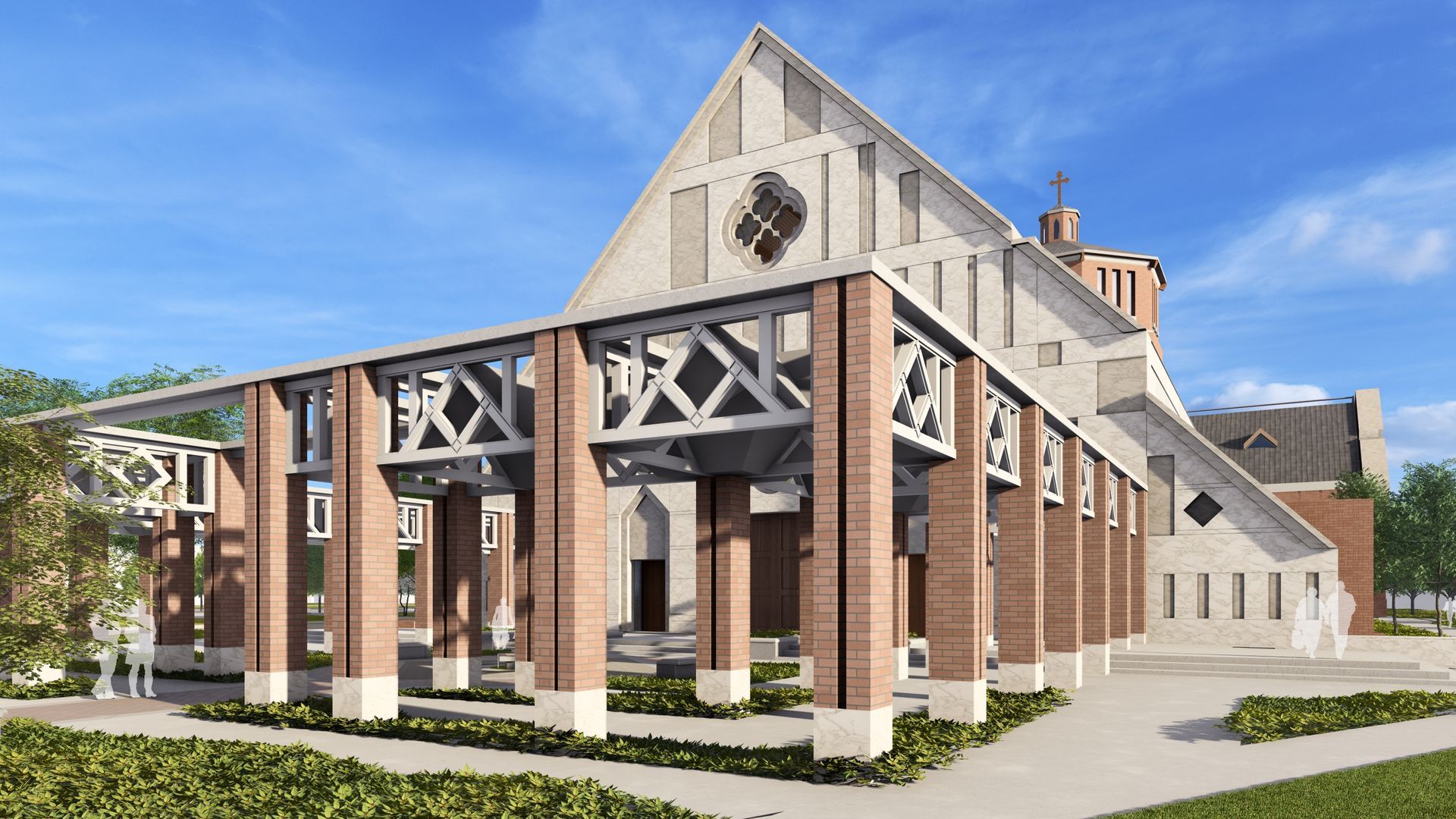
The courtyard draws inspiration from many ancient churches in Rome. It provides a transition from the noise and business of life in the world into a sacred space of prayer and contemplation. It is porous enough to still be inviting yet secluded enough to provide for that transition. This courtyard also provides a space for liturgical gatherings to form processions which will go through the main doors of the church.
Our holy patron Saint Andrew was martyred by crucifixion upon an X-shaped cross. This cross, recalling the offering of his life out of love for Christ, is evoked throughout the structure. The triangular shape of the facade points to this cross, as well as the quatrefoil window near the top. This same design is echoed in the design elements of the courtyard structure.
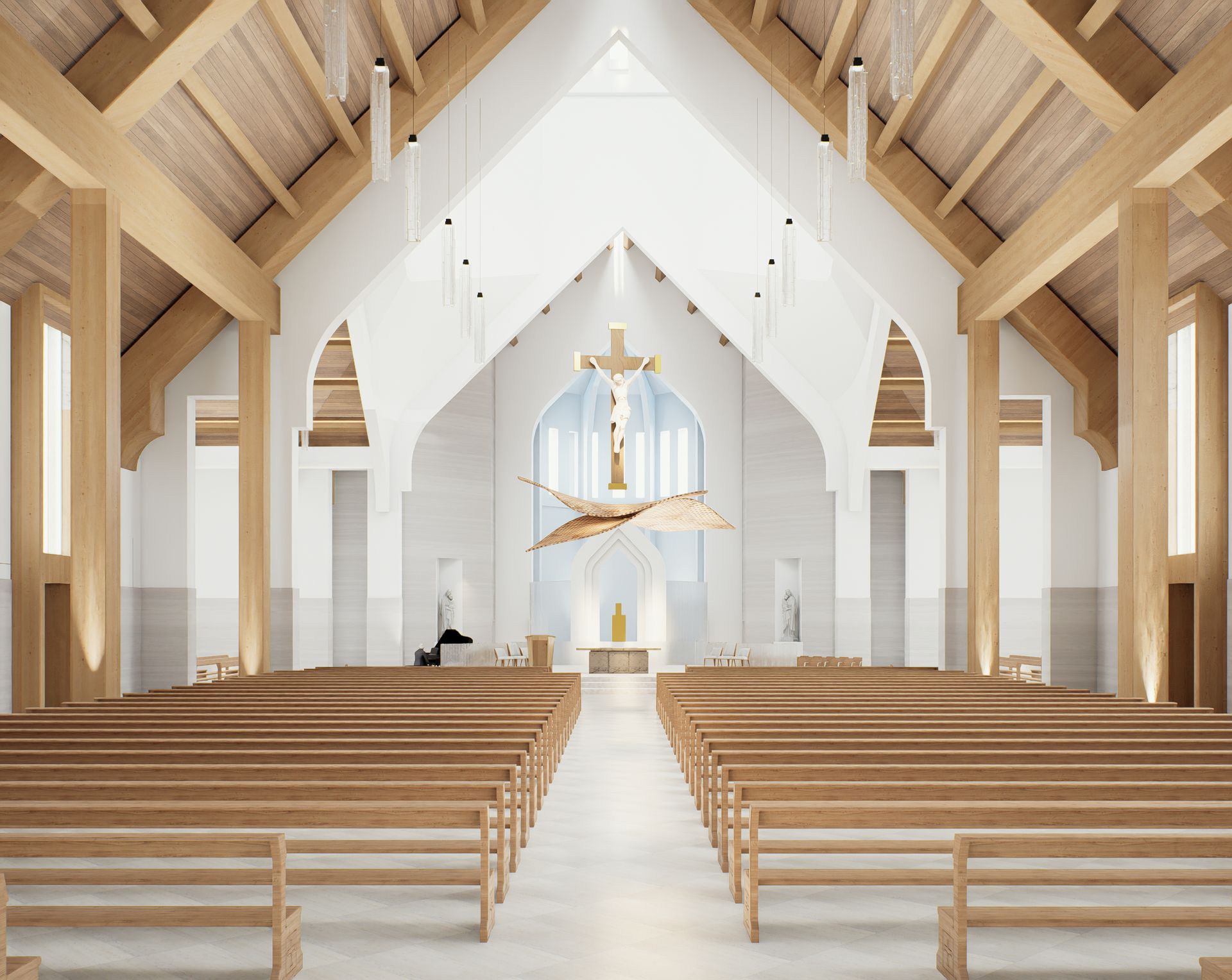
Here you have an image of the nave of the church where the faithful participate in the liturgy. The word comes from the Latin navis meaning a ship or boat. The Church is a vessel protecting her children and leading them through the storms of this world towards their heavenly homeland, nourishing them through the Word and Sacrament along the journey. The wooden beams of the ceiling accentuate this image of the ship and draw the eye towards the sanctuary where the Word of God is proclaimed and the Holy Body and Blood of the Lord is offered in the Eucharist.
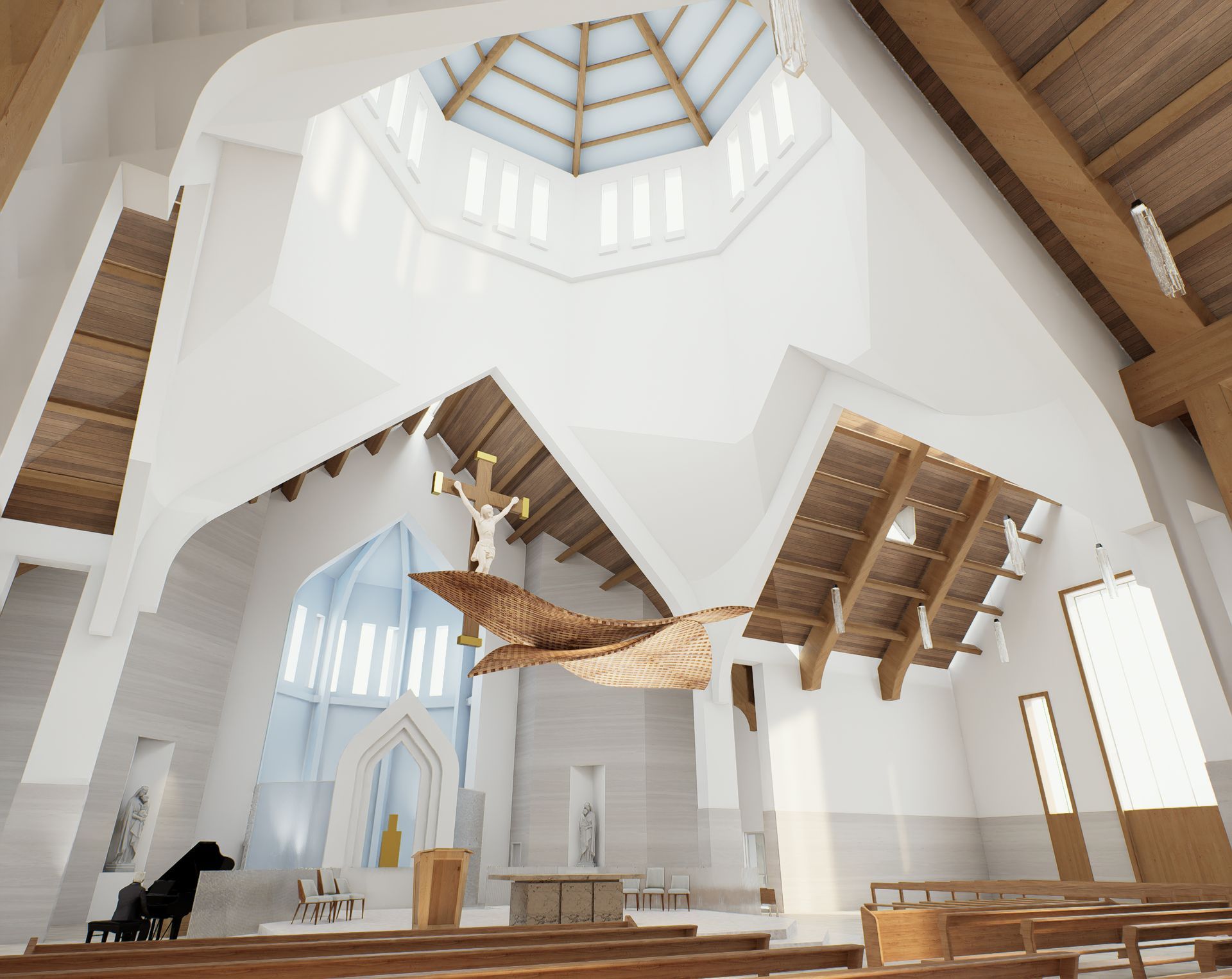
The cupula (dome) is eight-sided and in a Byzantine style. The height helps draw the heart and mind up to God. The Byzantine style is a nod to our Eastern Christian patrimony and the land where Saint Andrew was martyred (Patras, Greece). The eight sides pointing to the seven days in which God created the world and the eighth day in which God re-created the world through the resurrection of Jesus Christ (he rose on the first day of the week, the day after the Sabbath, the "eighth day").
The crucifix hands over the sanctuary reminding us that "God so loved the world that he gave his only Son, so that everyone who believes in him might not perish but might have eternal life." (John 3:16)
The wooden structure hovering over the altar is called a baldachin. It serves to anchor the space, draw the eye, and accentuate the sanctuary. It also acts as a veil to cover that which is most sacred, in this case the altar where the sacrifice of Calvary is re-presented. The particular shape and style of this baldachin is designed like a net recalling Saint Andrew's profession as a fisherman, and his call from Christ to be a "fisher of men." The wave design recalls the waves of the sea and the shape of a boat, again a reference to Saint Andrew. If you were to stand underneath the baldachin and look up, you would see the familiar X-shaped cross of Saint Andrew's martyrdom.
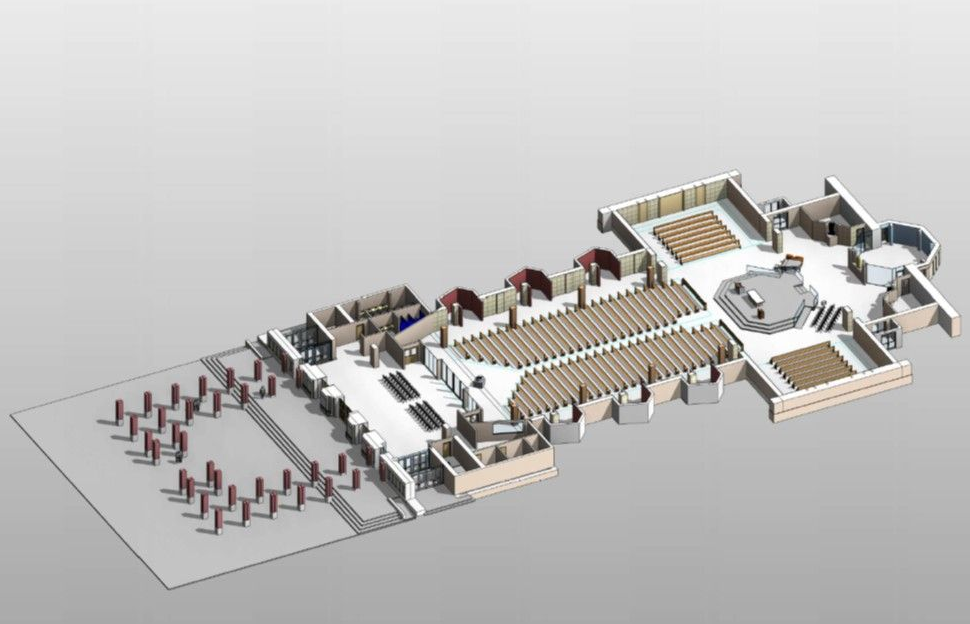
Here you have a cross section of the floor plan. The columns on the left form the courtyard. Just inside the main doors you have the narthax. This is used as a gathering space and another final transition into the sacred space of the church. It can also serve as ample overflow seating for larger celebrations. This area includes other supporting elements such as the bathrooms, sacristy, and cry room.
Moving into the nave you have primary seating for 800 people. At the start of the nave you have the baptismal font where we are reborn as sons and daughters of the Father. On both sides of the nave you see a total of six small rooms. The first two will be the confessionals where we encounter the tender mercy of God. The other four will be small devotional chapels bearing images of the saints and a space for votive candles to provide for the devotions of the people of the parish.
The sanctuary with the altar sits at the crossing of the nave and the transept. This is the focal point of the celebration of the liturgy. Spaces for the choir are on the sides behind the sanctuary to support the congregation in singing "psalms, hymns, and spiritual songs (Ephesians 5:19)." The pews in the transept indicate future seating expansion points.
In the apse (the back of the church) you see additional space for storage and another sacristy on the left and right. At the center at the very back is a small chapel. The tabernacle sits in the wall between this chapel and the main church. This provides easy access during the liturgy while providing a smaller and more intimate space for personal prayer. This chapel can be accessed from the outside to provide a space for perpetual Adoration of the Blessed Sacrament.
Project Phases
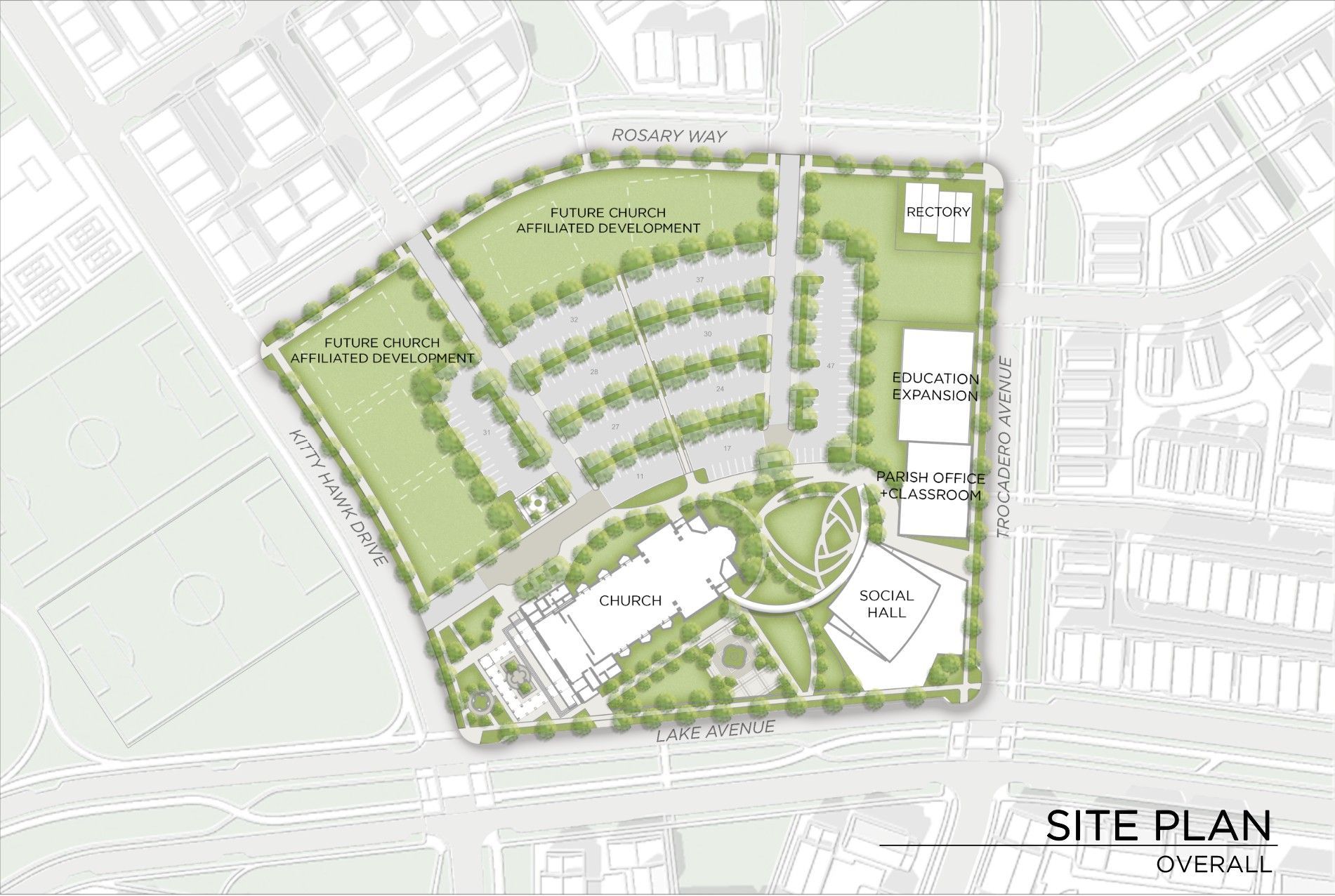
The church is part one of the overall plan for the 10-acre site in Daybreak. The church is the primary piece and the crown. The worship and love of God is the “one thing necessary” as Jesus tells Martha and Mary. All our other activities find their purpose and energy from the worship of God. The rest of the site plan includes a social hall, offices, classrooms, rectory, garden areas, and space for future development. We are currently working on putting a new food pantry into the site plan as well. This will be included in future updates.